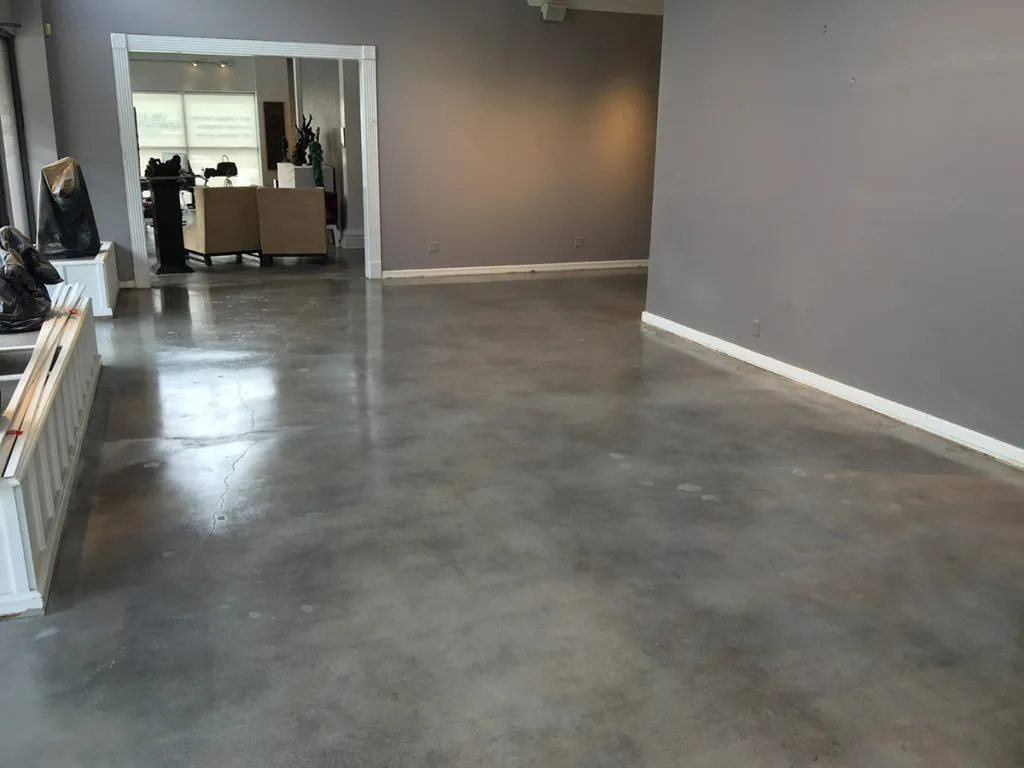
Some flaws in new concrete are normal and some are defects. This page helps you tell which is which, and what to do in California if the contractor does not put a defect right.
Why is my new concrete already cracking?
New concrete cracks because it shrinks as it dries. Hairline cracks in the first weeks are common and are not a structural fault. Joints are cut so the slab cracks in a straight line where you cannot see it. Cracks that are wide, uneven in height or running everywhere point to a problem: joints cut too late or too far apart, a poor base, or a surface that dried too fast in Vacaville's summer heat and wind.
Is the contractor responsible for a crack that shows up weeks later?
That depends on the crack and on your contract. A fine shrinkage crack is usually treated as normal and is excluded by most written warranties. A wide crack, a crack with one side higher, or cracking caused by skipped joints or a thin slab is a workmanship question, and the contractor should be asked to look at it. Photograph it with a coin or tape for scale, note the date and send a written request.
Why does my new concrete have dark and light patches?
Uneven drying is the common cause. Parts of the slab in shade, or under a curing blanket, hold moisture longer and look darker. Loads from different trucks, extra water added on site, and uneven troweling also change the shade. Most blotchiness fades over several months as the slab dries out. Color that is still patchy after a full dry season is worth raising with the contractor.
What happens if it rains on fresh concrete?
Rain in the first few hours can wash cement off the surface and leave it weak, pitted or dusty. Once the concrete has been finished and has stiffened, light rain does little harm and can even help curing. If rain caught your pour, look for a soft, sandy top or pockmarks. A weak surface can often be ground and resurfaced. Vacaville's rain comes mostly from November to March, so winter pours are booked around the forecast.
My slab has footprints, rough spots or a wavy finish with low spots. Is that acceptable?
Footprints and gouges are not acceptable on a finished slab. Some texture variation is normal with a broom finish. Low spots that hold water deeper than a thin film, called birdbaths, are a defect, because the slab is meant to drain. Check with a hose a few days after the pour and photograph where the water sits. Small low spots can be ground or filled with a bonded patch. Large ones mean redoing that section.
Are control joints really necessary?
Yes. Control joints are planned weak lines that tell the slab where to crack. Without them the cracks choose their own route. A common rule is a joint spacing in feet of two to three times the slab thickness in inches, so about 8 to 12 feet for a 4-inch slab, cut to about a quarter of the slab's depth.
What if the contractor says he will saw-cut the joints a week later? That is too late. Saw cuts are normally made within hours of finishing, as soon as the surface can take the saw without raveling, and sooner still in hot weather. After a week the slab has already cracked where it wanted to.
My slab was poured without rebar or mesh and I found out after. What now?
First check the contract. If the quote listed rebar or mesh and the slab was poured without reinforcement, you did not get what you paid for and you can ask for a remedy in writing. If steel was never specified, the slab is not automatically defective. Plain concrete on a well-compacted base can serve for a patio. On expansive clay, though, steel helps hold cracked pieces together, so its absence is worth a price adjustment discussion at the least.
My new stamped concrete is slippery. Can that be fixed?
Yes. Stamped concrete gets slippery when a glossy sealer sits on a smooth pattern, and it is worst when wet. The fix is to recoat with a sealer that has a fine grit additive mixed in, or to strip the gloss sealer and use a matte one. Ask for the additive from the start on pool decks, steps and sloped walks.
Why is my stamped concrete fading, cloudy or peeling?
A cloudy white haze is moisture trapped under the sealer, usually because it was applied too thick, too soon or onto a damp slab. Peeling means the sealer never bonded. Fading is the strong Solano County sun wearing the sealer and surface color. Haze and peeling are fixed by stripping or re-dissolving the sealer and reapplying it thin. Fading is fixed by cleaning, touching up color and resealing.
The surface started flaking within the first year. Why?
In a mild climate like ours, flaking in the first year nearly always comes from the day of the pour. Too much water in the mix, water sprinkled on to make troweling easier, or no curing in hot dry weather leaves a thin weak skin. In colder places the first winter of freezing and deicer does the same damage, but that is unusual in Vacaville. Report it to the contractor in writing while it is fresh.
It was poured in extreme heat and now it looks bad. Is the heat to blame?
Possibly. Concrete poured in extreme heat without precautions sets fast, is hard to finish and can dry out on top before it gains strength. The signs are fine random cracks, a dusty or weak surface and rough finishing marks. Heat alone is not an excuse. A summer pour here should start at dawn on a dampened base, with wind protection and curing straight after finishing. Ask the contractor what steps were taken.
The stamped pattern is crooked or uneven and I have not made the final payment. What should I do?
Put the problem in writing before you pay the final balance. List the defects with photos and ask for a plan to fix them. The Contractors State License Board says payments should not get ahead of the work completed, so holding an amount that matches a real, documented defect is reasonable. Holding the whole balance over a small flaw is not. A crooked stamp cannot be re-stamped once hard, so remedies are a price reduction, an overlay or replacing the affected area.
The crew left ruts in the lawn, washout and splatter. Who cleans that up?
The contractor should, unless your contract says otherwise. Ruts from trucks and buggies, the slurry left where the chute was rinsed, and splatter on walls, fences and garage doors are all part of the job site. Ask for it in writing with photos. For future jobs, agree before the pour where the truck will go and where washout will happen, and have that written on the quote.
What if the new pad is out of level or the forms were left on?
A pad that is out of level by design is normal, since outdoor slabs are sloped to drain. A pad that slopes the wrong way, or one meant to be flat for a shed, hot tub or equipment and is not, is a defect to raise right away. Forms are normally stripped within a day or two. Forms left on for weeks can stick and chip the slab edge when they are finally pulled. Ask the contractor to remove them with care and repair any broken edges.
What can I do if the contractor will not come back to fix it?
Follow these steps in order.
- Send a dated letter or email describing the defect, with photos, and give a reasonable deadline.
- Read your contract for the warranty and any dispute terms.
- Look up the licence on the Contractors State License Board site, cslb.ca.gov, and note the bond company.
- File a complaint with the CSLB. The board can investigate and offers mediation and arbitration.
- Get a written opinion and a repair price from another licensed contractor.
- Consider small claims court or an attorney for the cost of the repair.
If the contractor turns out to be unlicensed, tell the CSLB that as well. We are happy to inspect work done by others and give you a written assessment and a quote.
To get an actual price for your job, ask for a free on-site estimate. We measure, look at the soil and the access, and put the quote in writing. Call (707) 385-5848 or text a photo of the area.